

[ENG below]
Het programma van de Communistische School van de Revolutionair Communistische Organisatie (RCO)
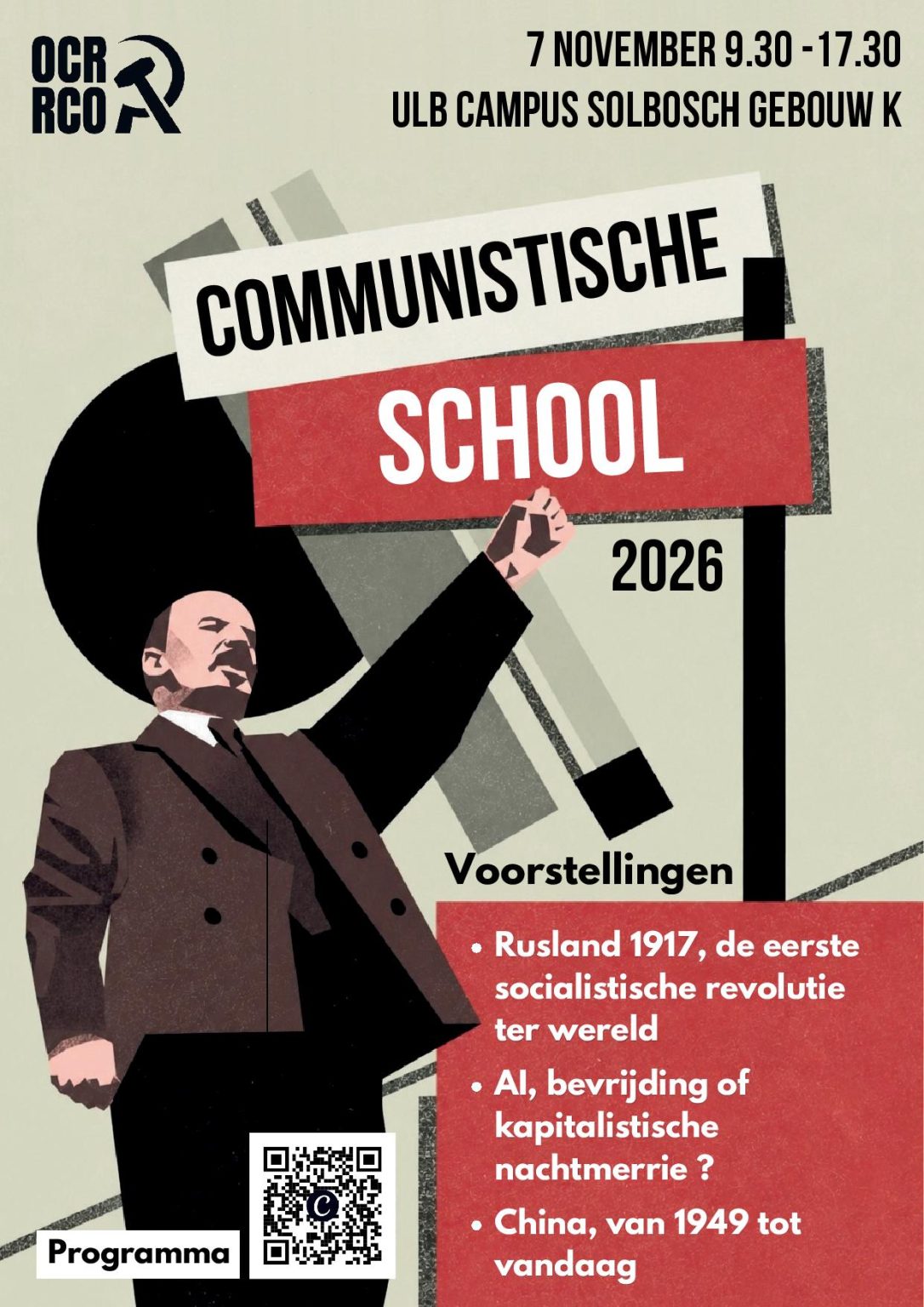
Datum: Zaterdag 7 november 2026, van 9.30 tot 17.30
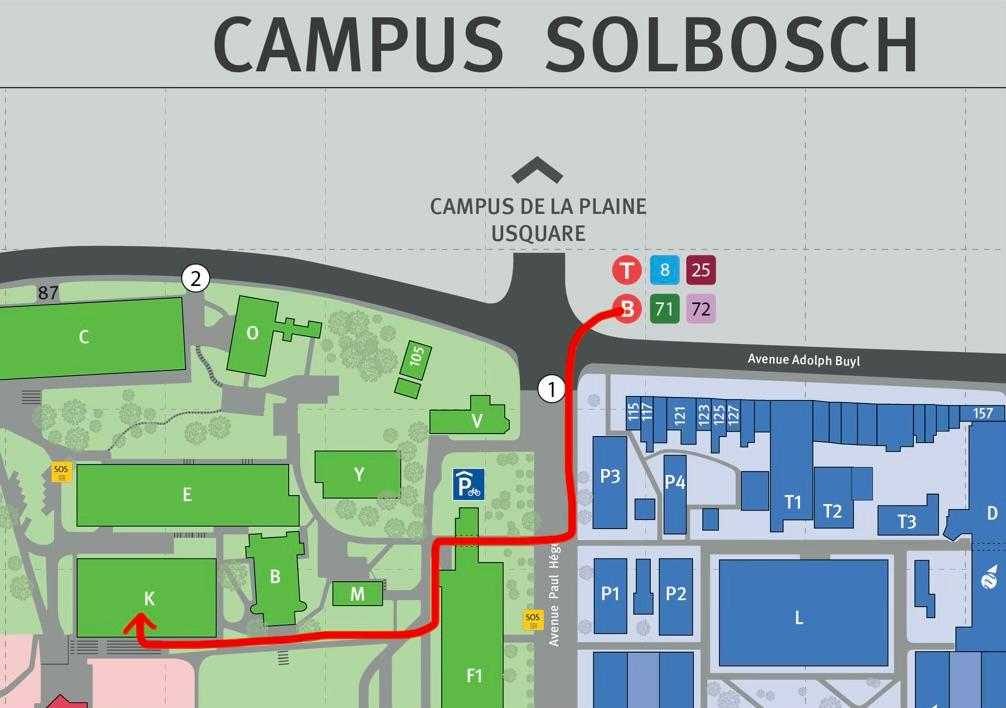
Locatie: Université Libre de Bruxelles, Campus Solbosch, Gebouw K
Het programma:
09.30 Onthaal
10.00 – 12.00 Rusland 1917, de eerste socialistische revolutie ter wereld (ENG/NL)
De Russische revolutie van 1917 is een van de belangrijkste gebeurtenissen in de geschiedenis. Voor het eerst slaagden de massa’s erin zich van hun ketenen te bevrijden en de macht te grijpen. Hoe hebben de bolsjewieken de massa’s voor zich weten te winnen om hen naar de overwinning te leiden? Hoe belangrijk is het vandaag de dag om een revolutionaire partij op te bouwen, naar het voorbeeld van de bolsjewieken? De bestudering van deze periode is van cruciaal belang voor de revolutionairen van vandaag.
Aanbevolen lectuur:
De Februarirevolutie van 1917 – de bestorming van de hemel
Was de oktoberrevolutie een staatsgreep?
Mythe – De Russische revolutie heeft niets goed voortgebracht
De Russische revolutie: gedane zaken of actuele geschiedenis
12.00-13.00 Lunch
13.00-15.00 AI: bevrijding of kapitalistische nachtmerrie? (ENG/NL)
Het IMF heeft AI bestempeld als de „vierde industriële revolutie“. AI heeft ongetwijfeld het potentieel om ons leven te verbeteren. Maar onder het kapitalisme wordt het potentieel ervan om de productie radicaal te veranderen – om de werkweek te verkorten, overvloed mogelijk te maken en de menselijke creativiteit te bevrijden – omgezet in het tegenovergestelde.
Of het nu gaat om een gigantische speculatieve zeepbel die miljoenen mensen in gevaar brengt wanneer hij barst, om werkloosheid, om toegenomen werkdruk, om de ‘banalisering’ van de kunst of om de bouw van energieverslindende datacenters: de ‘AI-boom’ legt de volle omvang van het geweld van de marktanarchie bloot.
Ons doel moet zijn om deze technologie te bevrijden van de beperkingen van het kapitalistische systeem en haar te onttrekken aan de controle van de bazen in de technologiesector. In plaats van haar te gebruiken om koste wat kost winst na te streven, zouden we haar kunnen inzetten voor de ontwikkeling van de mensheid.
Aanbevolen lectuur:
Podcasts
Artificial Intelligence and the nature of consciousness
Artikels
Artificial Intelligence: doomsday for humanity, or for capitalism?
Artificial intelligence: capitalism’s salvation, or another bubble?
AI investment prepares new attacks against the working class
15.00-15.15 Pauze
15.15-17.15 China van 1949 tot vandaag (ENG/NL)
Vanuit marxistisch perspectief was de Chinese revolutie van 1949, ondanks haar bureaucratische misvormingen, na de Russische revolutie de op één na belangrijkste gebeurtenis in de menselijke geschiedenis. Zij leidde tot de afschaffing van het grondbezit en het kapitalisme en tot het einde van de imperialistische overheersing. Vandaag is het duidelijk geworden dat de groei van China als kapitalistische en imperialistische macht zijn onvermijdelijke grenzen bereikt. Bijgevolg zijn er historische confrontaties in de maak, zowel op nationaal niveau, in de vorm van een klassenstrijd, als op internationaal niveau, in de vorm van een escalatie van de interimperialistische spanningen. Hoe is dit zo gekomen?
Aanbevolen lectuur :
China, kapitalistisch of socialistisch
De koloniale revolutie en de gedeformeerde arbeidersstaten
17.15 uur Slotwoord
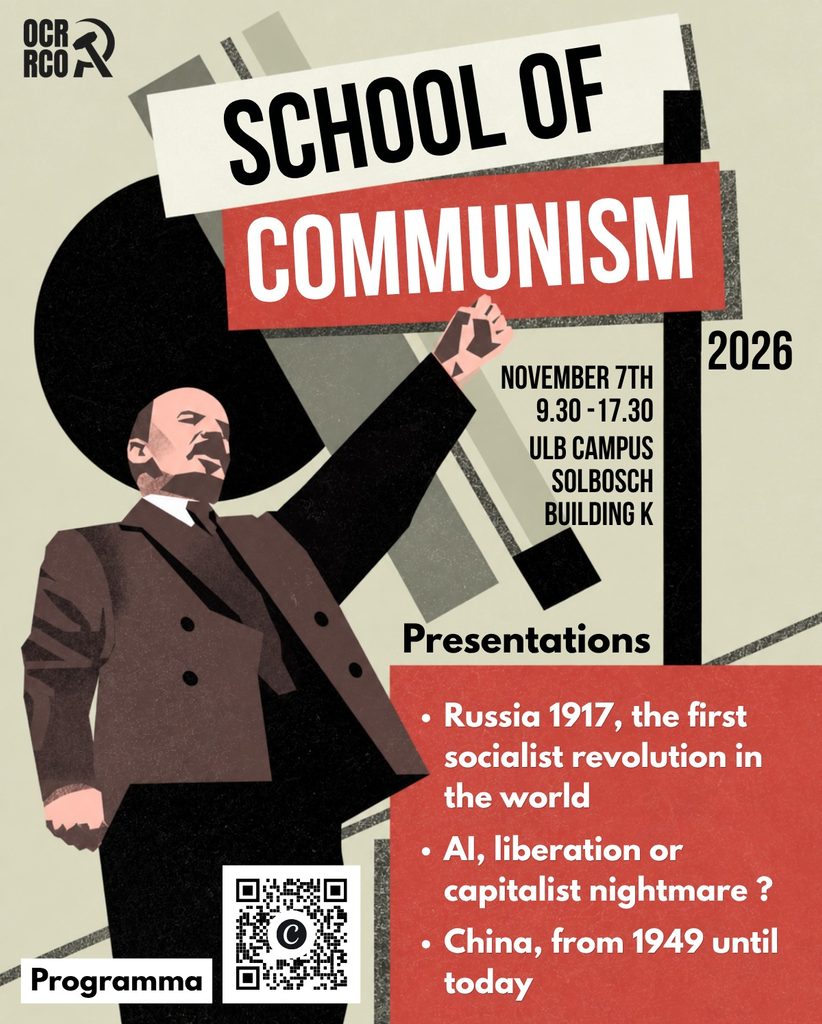
Date: Saturday, 7 November 2026, from 9:30 AM to 5:30 PM
Location: Université Libre de Bruxelles, Solbosch Campus, Building K
Programme
09:30 AM Reception
10:00 AM – 12:00 PM Russia 1917: The First Socialist Revolution in the World (ENG/NL)
The Russian Revolution of 1917 is one of the most important events in history. For the first time, the masses succeeded in breaking their chains and taking power. How did the Bolsheviks win the support of the masses and lead them to victory? How important is it today to build a revolutionary party, following the example of the Bolsheviks? Studying this period is of crucial importance for revolutionaries today.
Recommended reading:
- The February Revolution of 1917: The Storming of Heaven
- Lessons of October
- In Defence of Lenin
- Top 10 lies about the Russian Revolution
12:00 PM – 1:00 PM Lunch
1:00 PM – 3:00 PM AI: Liberation or Capitalist Nightmare? (ENG/NL)
The IMF has described AI as the “Fourth Industrial Revolution.” AI undoubtedly has the potential to improve our lives. But under capitalism, its potential to radically transform production, shorten the working week, create abundance, and unleash human creativity is turned into its opposite.
Whether it takes the form of a gigantic speculative bubble that could endanger millions when it bursts, rising unemployment, increased workloads, the “banalization” of art, or the construction of energy-hungry data centres, the AI boom reveals the full extent of the violence of market anarchy.
Our goal should be to free this technology from the constraints of the capitalist system and remove it from the control of the bosses of the tech industry. Instead of using it to pursue profit at all costs, we could harness it for the development of humanity.
Recommended material
Podcasts
Articles
- Artificial Intelligence: Doomsday for Humanity, or for Capitalism?
- Artificial intelligence: capitalism’s salvation, or another bubble?
- AI investment prepares new attacks against the working class
3:00 PM – 3:15 PM
Break
3:15 PM – 5:15 PM
China from 1949 to the Present Day (ENG/NL)
From a Marxist perspective, the Chinese Revolution of 1949, despite its bureaucratic distortions, was the second most important event in human history after the Russian Revolution. It led to the abolition of landlordism and capitalism and brought an end to imperialist domination. Today, it has become clear that China’s growth as a capitalist and imperialist power is reaching its inevitable limits. As a result, historic confrontations are in the making, both on the national level, in the form of class struggle, and on the international level, in the form of escalating inter-imperialist tensions. How did this come about?
Recommended reading
- Is China still Red?
- The Colonial Revolution and the Deformed Workers’ States
- Chinese Revolution, 1949